First-time learners
Begin with a comfortable setup and short musical tasks. Discuss interest, readiness, concentration, and parent support instead of relying on a fixed starting age.
Private online tuba lessons
Online tuba lessons help kids and teens develop a supported setup, clear tone, steady rhythm, and musical confidence. Discuss the student’s instrument and ensemble goals with a teacher before planning the first lesson.
Learn from home with live, one-on-one instruction. Share your child’s experience, interests, and goals, and confirm that the instructor offers this subject before requesting a trial.
 A full sound. A steady ensemble foundation.
Musical foundations with a purpose
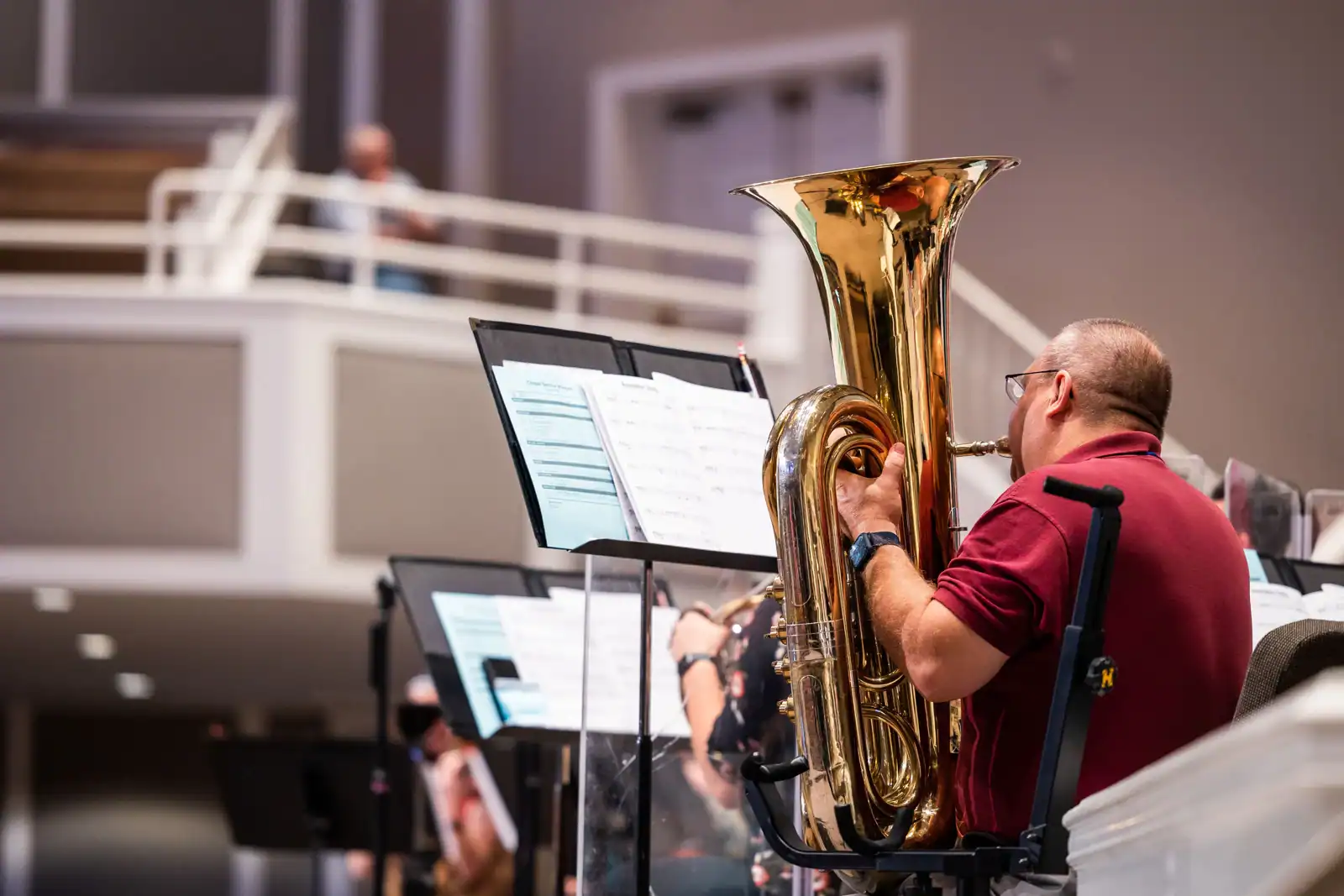
Tuba instruction should fit the actual instrument the student plays. Instrument type, size, and support affect the setup, while an ensemble part may have different demands from a solo piece. A teacher can use a short musical line to connect breath planning, note length, and a reliable rhythmic foundation.
Every stage has a next step
Begin with a comfortable setup and short musical tasks. Discuss interest, readiness, concentration, and parent support instead of relying on a fixed starting age.
Build from existing experience, revisit a difficult passage, or make a clearer connection between technique and music. Share current materials so the teacher can plan useful work.
Work toward repertoire, creative projects, school music, or a specific performance goal. Choose an instructor whose specialties fit the student’s interests and current foundations.
Adults are welcome to explore teacher availability too. Teaching specialties, suitable starting points, and scheduling vary by instructor.
The personal connection
Look for an instructor who teaches tuba and can explain musical ideas clearly. Review the profile for relevant specialties, experience with the student’s stage, and the kind of repertoire or project your child wants to explore.
GoldPass focuses its recruiting on Los Angeles, Nashville, and New York. Online lessons let your family consider instructors beyond your neighborhood. Current teaching subjects and availability must be confirmed individually.
Explore Teachers & Check Availability ↗Your home learning space
A suitable tuba, mouthpiece, stable seating or support, and a music stand. Share the instrument type with the teacher and ask about care. Set the camera to show the player and valve hand while keeping the sound clear.
Test the call before the first lesson. Younger students may need a parent nearby to help with positioning, materials, or instructions. Ask which sound settings work best for the planned activities.
Music in your family’s week
Take a short phrase and plan where it begins, how the notes connect, and where to breathe. Practice a valve change slowly, then return to the musical line. Use the teacher’s recommended balance of playing and rest.
Ask for a clear between-lesson task and a manageable stopping point. A short, specific goal makes it easier to return to the work. Tell the teacher what was easy, difficult, or confusing so the next lesson can respond to the student’s experience.
During a scheduled video lesson, the student can hear demonstrations, ask questions, try an idea, and receive feedback. Internet delay means teacher and student usually take turns rather than expecting synchronized remote performance.
Learning online removes the drive and waiting room. Discuss regular times with the instructor and make a realistic place for music alongside school, homework, and family plans.
Your child’s first step
A trial gives your family a chance to discuss goals, try the teaching approach, and ask about materials and a realistic first step. Check current teacher availability before booking.
If the directory has no matching instructor, contact GoldPass to ask about options. This lesson page does not guarantee an immediate opening.
Explore Teachers & Check Availability ↗A parent’s guide
Practical answers about tuba lessons and getting started.
Ask GoldPass a question ↗Ask a teacher to review readiness, reach, weight, and support options. Instrument fit and school requirements should guide the choice rather than an age rule alone.
Yes. Share the instrument type, model if known, and any school instructions. The teaching plan should match the actual equipment and music.
Bring the score and the director’s requirements. A teacher can focus on reading, rhythm, sound, and difficult passages without promising a particular audition outcome.
Review the matching teacher profiles and confirm the actual teaching subject, goals, and availability. Use the trial-lesson option on the selected profile, or contact GoldPass for help if there is no matching instructor.
These are scheduled, live one-on-one online lessons. The teacher can demonstrate, listen, and respond to the student. The plan depends on the student’s goals and the instructor’s specialties.
Discuss available lesson formats with the instructor. Age, attention, experience, and the planned activities help determine a useful length. A longer session is not automatically the best starting point.
No. A parent can help a younger child prepare equipment, join the call, and remember the practice task. Ask the instructor what support would help while leaving the child room to participate.