First-time musicians
Start with short musical ideas and a comfortable setup. Discuss readiness and parent support rather than relying on a fixed starting age.

Private online piano and guitar lessons
Explore two different instruments with a teacher who offers both piano and guitar. Live online combo lessons can help your child connect notes, chords, and rhythm across the keyboard and fretboard while building practical skills on each.
Learn from home with personal, one-on-one instruction. Compare teacher profiles, discuss your child’s experience and interests, and confirm that the instructor teaches both subjects before requesting a trial.

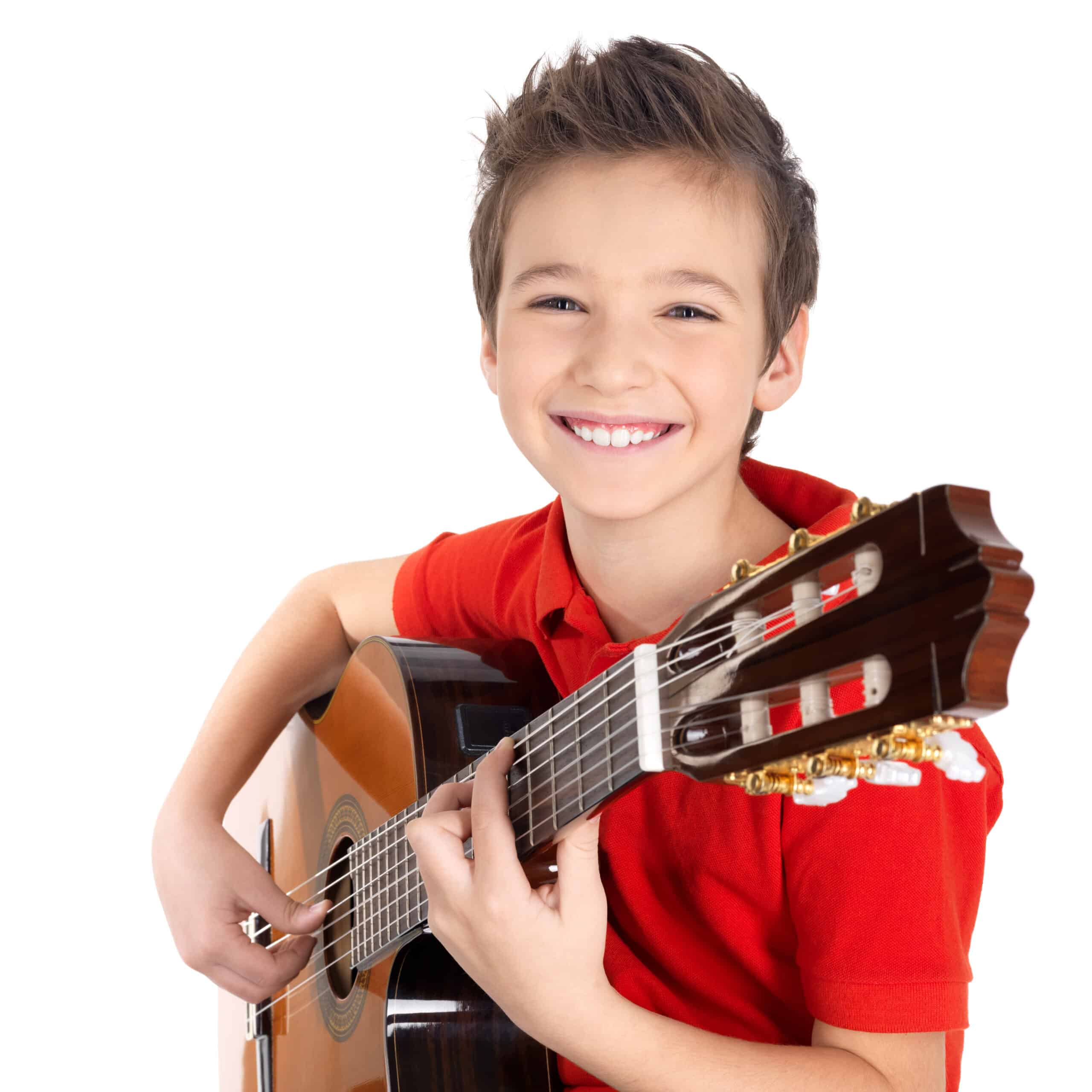
Connected musical foundations
Piano makes the arrangement of notes visible; guitar introduces chord shapes and string-based patterns. Comparing a simple melody or chord on both can help a student understand the same musical idea from two perspectives. Each instrument still deserves its own technical work, and the teacher can set a realistic balance for the student’s week.
Every stage has a next step
Start with short musical ideas and a comfortable setup. Discuss readiness and parent support rather than relying on a fixed starting age.
Use existing skills as a starting point for the second subject. Revisit the foundations and connect new ideas at a manageable pace.
Work toward favorite songs, stronger coordination, or creative projects. Choose a teacher with experience relevant to the student’s goals.
Adults are welcome to explore teacher availability too. Teaching specialties and scheduling vary by instructor.
The personal connection
The right combo teacher needs more than experience performing on two instruments. Look for an instructor who can explain clearly, divide lesson time thoughtfully, and connect the subjects in a way your child understands.
GoldPass focuses its recruiting on Los Angeles, Nashville, and New York. Online lessons let your family consider teachers beyond your neighborhood. Review each profile for the actual subjects, styles, and ages taught.
Explore Teachers & Check Availability ↗Your home learning space
Access to a piano or suitable keyboard and a guitar that fits the student. Arrange a safe, easy way to switch instruments during the video call. Set the camera so the teacher can see the keys and both guitar hands when each instrument is in use.
Test the call before the first lesson. Younger students may need a parent nearby to help with equipment, positioning, or instructions. Ask the teacher which sound settings work best for live music.
Music in your family’s week
Give each instrument a clear task. A student might play a short melody on piano, practice two guitar chords, and then identify the shared notes. Ask for a manageable schedule rather than doubling an existing practice load overnight.
Ask for a specific between-lesson task and a clear stopping point. It is easier to return to a short section than to wonder where to start. The plan can change as the teacher sees what is working.
During a scheduled video lesson, the student can hear demonstrations, ask questions, try an idea, and receive feedback. Internet delay means teacher and student usually take turns playing rather than expecting synchronized remote duets.
Online lessons remove the drive and waiting room. Discuss regular times with your instructor and give music a place alongside school, homework, and family plans.
Your child’s first step
A trial is an opportunity to discuss the student’s goals, try the teaching approach, and ask about the balance between subjects. Check current teacher availability before booking.
If the directory has no matching instructor, contact GoldPass to ask about options. A lesson page does not guarantee an immediate opening.
Explore Teachers & Check Availability ↗A parent’s guide
Practical answers for two connected musical interests.
Ask GoldPass a question ↗No. Discuss whether they are starting both or already play one. The teacher can introduce new skills while using existing experience as a helpful connection.
Not automatically. Agree on the lesson length and how time is divided. A combo lesson can connect the subjects, while separate sessions may be better for some goals.
Regular access to both is useful for lessons and practice. Ask the instructor what equipment is needed before arranging the first session or purchasing an instrument.
It depends on interest, readiness, and available practice time. A teacher can begin with a primary focus and introduce the second gradually, adjusting the plan if it becomes overwhelming.
Explore the matching directory and review instructor profiles. Confirm that the teacher offers both subjects, discuss the student’s goals, and use the trial-lesson option on the selected profile. Availability must be confirmed.
These are scheduled, live one-on-one online lessons. The teacher can demonstrate, listen, and respond to the student in the moment; the lesson plan depends on the student and instructor.
Discuss 30-, 45-, or 60-minute formats with the teacher. The useful length depends on age, concentration, experience, and how the subjects are divided. A longer session is not automatically better.
No. A parent can help a younger child prepare the equipment, join the call, and remember the practice plan. Ask the instructor what support would be useful without taking over the student’s lesson.